(434) 252-3783
Why Is My Roof Sagging Between the Rafters? When a Dip in Your Roof Is More Than Cosmetic
 9.14.26
 10 minutes read
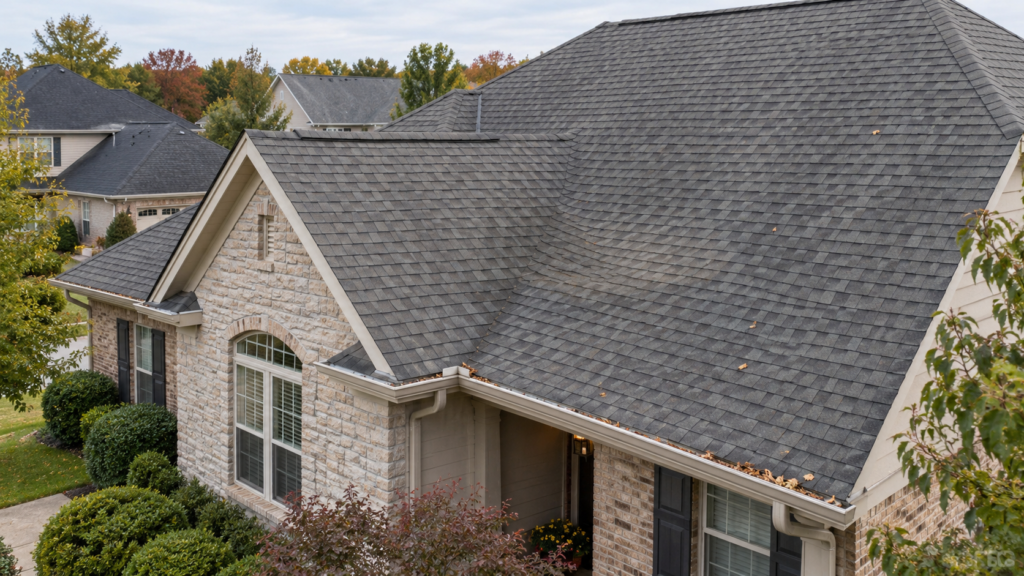
Roof sagging between the rafters is not something homeowners should ignore. A slight dip in the roof may look like a surface issue from the ground, but it can sometimes point to weakened roof decking, moisture damage, framing movement, poor ventilation, heavy roof loads, or structural concerns inside the roof system.
In many cases, a small roof dip does not mean the roof is about to collapse. But it does mean the roof should be checked carefully. A sagging area can allow water to collect, shingles to wear unevenly, and hidden damage to spread into the attic, decking, rafters, insulation, or interior ceiling.
Kenneth Daniel Roofing helps homeowners evaluate roof concerns, roof repairs, roof replacement planning, storm damage restoration, gutters, siding, and other exterior needs. If you notice a dip, wave, or uneven roof line, understanding what may be causing it can help you decide when to schedule a professional inspection.
Why Is My Roof Sagging Between the Rafters?
Roof sagging between the rafters can happen when roof decking weakens, moisture damages the wood, rafters shift, attic ventilation is poor, the roof carries too much weight, or old roofing materials begin to fail. A visible dip may be cosmetic in some cases, but it can also signal a structural or moisture-related problem that needs professional inspection.
Why a Sagging Roof Should Be Taken Seriously
A roof is built to shed water evenly. When part of the roof dips, sags, or looks wavy, water may not move off the surface the way it should. That can create more stress on shingles, underlayment, decking, flashing, gutters, and nearby roof transitions.
Roof sagging between the rafters can also be a sign that the problem is below the shingles. The visible dip may be coming from the roof deck, framing, attic moisture, or long-term structural movement. That is why the issue should be inspected instead of treated as only a visual flaw.
1. Weak or Damaged Roof Decking
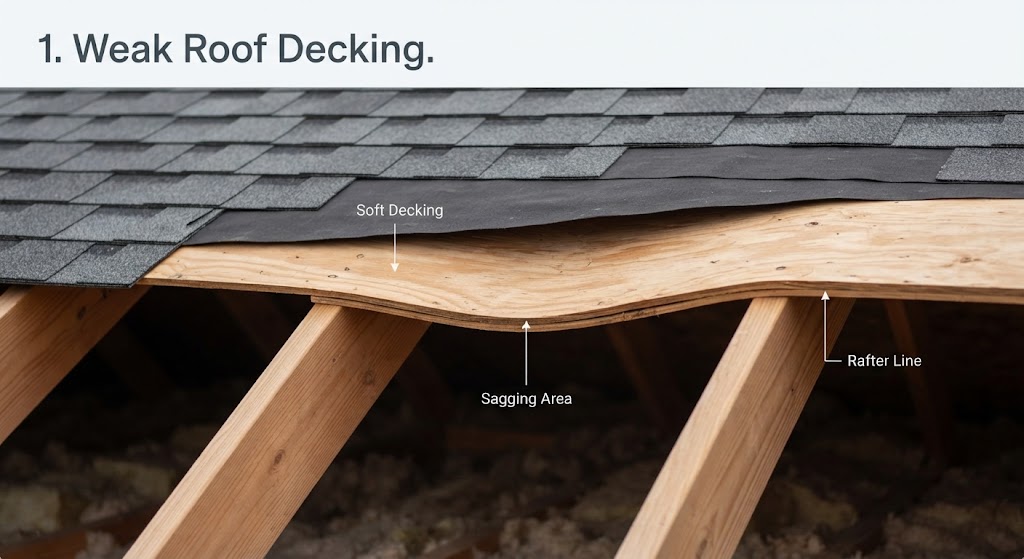
One common reason for roof sagging between the rafters is weakened roof decking. Decking is the wood layer under the shingles. If it becomes soft, warped, or damaged, it may no longer hold a flat roof plane.
Decking can weaken because of:
Long-term moisture exposure: Water can soften wood over time.
Past roof leaks: Even small leaks can damage the deck if ignored.
Poor attic ventilation: Trapped heat and moisture can affect wood materials.
Aging roof materials: Older roofing systems may lose strength over time.
What this may mean: If the decking is soft or deteriorated, the roof may need repair or replacement in that affected area.
Limitation Note: Homeowners should not step on a sagging roof section. Weak decking can be unsafe and should be checked by a professional.
2. Moisture Damage From an Old or Hidden Leak
A sagging roof area may be connected to a leak that has been active for longer than the homeowner realized. Water can enter through damaged shingles, loose flashing, cracked pipe boots, roof valleys, or storm-damaged areas.
Warning signs may include:
Brown or yellow ceiling stains: These may point to water intrusion.
Soft roof decking: Moisture can weaken the wood below the shingles.
Musty attic odors: Damp wood or insulation may create a smell.
Dark roof decking stains: Staining can show past or active water movement.
What this may mean: If roof sagging between the rafters is caused by moisture, the source of the leak should be found before more damage spreads.
Limitation Note: A ceiling stain may not be directly below the leak source because water can travel along framing or insulation.
3. Rafters or Framing May Be Moving or Undersized
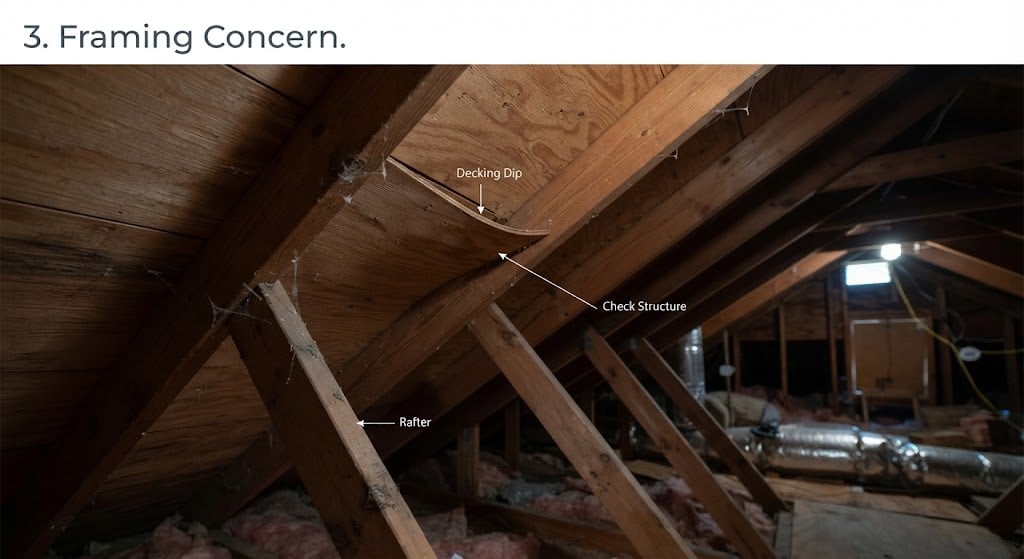
Sometimes the issue is not only the decking. Roof framing may move, settle, or fail to support the roof properly. Rafters can shift over time because of age, moisture, heavy loads, poor original construction, or previous structural changes.
Framing-related concerns may include:
Uneven roof lines: A dip may follow a weak framing area.
Cracked or split rafters: Damaged framing can reduce support.
Improper spacing: Wide rafter spacing can allow decking to sag between supports.
Past remodeling changes: Altered framing can affect roof support.
What this may mean: A structural evaluation may be needed if the sagging appears deep, widespread, or connected to framing movement.
Limitation Note: Roofing contractors can inspect roof and attic conditions, but serious structural concerns may also require evaluation by a qualified structural professional.
4. Heavy Roofing Materials or Extra Layers
A roof can sag when it carries more weight than the structure was designed to support. This may happen if old roofing layers were not removed before new shingles were installed, or if the roof has heavier materials than the framing can properly support.
Weight-related warning signs include:
Wavy roof planes: The roof may not look flat from the ground.
Dips between supports: Decking may bend between rafters.
Multiple roof layers: Extra layers can add weight to the structure.
Interior cracks or movement: In some cases, added weight can affect nearby finishes.
What this may mean: If roof sagging between the rafters is related to extra weight, the roof may need a more detailed inspection before repair or replacement decisions are made.
Limitation Note: The visible roof surface alone may not show how many layers or materials are affecting the structure.
5. Poor Attic Ventilation Can Weaken Roof Materials
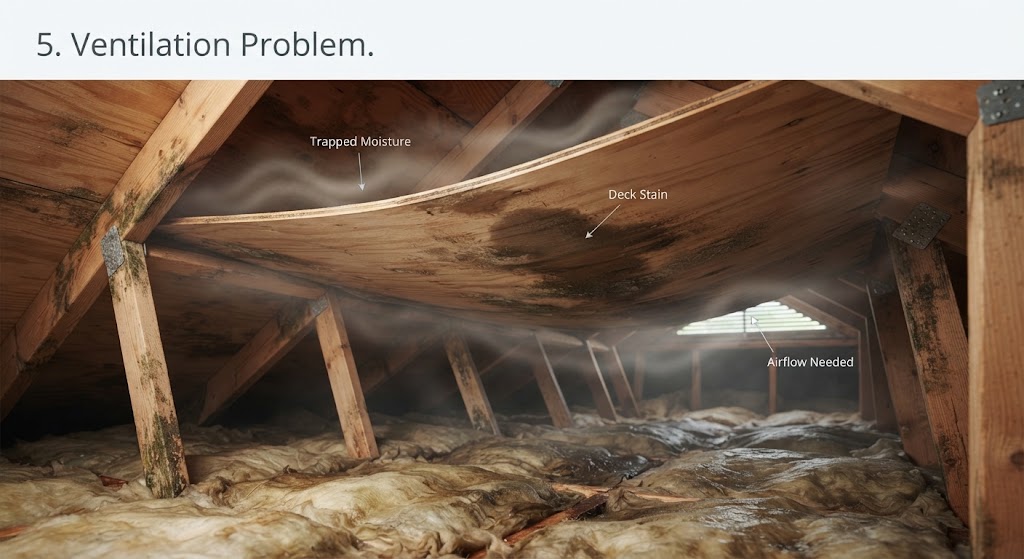
Attic ventilation helps control heat and moisture. When ventilation is poor, humid air can stay trapped under the roof deck. Over time, that moisture can weaken wood, affect shingles, and contribute to uneven roof surfaces.
Possible ventilation warning signs include:
Musty attic smells: Damp air may be trapped inside.
Dark roof decking stains: Moisture may be affecting the underside of the roof.
Rust on attic fasteners: Condensation may be present.
Uneven shingle wear: Poor ventilation can shorten roof life.
What this may mean: If attic moisture is part of the problem, fixing only the visible roof surface may not solve the cause of the sagging.
Limitation Note: Moisture in the attic does not always mean the roof is leaking. Condensation, ventilation, indoor humidity, or ductwork may also be involved.
6. Storm Damage May Have Weakened the Roof System
Wind, hail, heavy rain, and falling limbs can weaken a roof even when the damage is not obvious from the ground. A storm may loosen shingles, damage decking, shift flashing, or leave impact damage that becomes worse later.
Storm-related warning signs include:
Lifted shingles: Wind may weaken the shingle seal.
Dented gutters or vents: Hail or debris may leave impact marks.
Branches on the roof: Falling limbs can damage shingles and decking.
New dips after a storm: A visible sag may need immediate attention.
What this may mean: If roof sagging between the rafters appeared after a storm, the roof should be inspected as soon as possible to check for hidden structural or moisture damage.
Limitation Note: Not every storm causes roof damage, and not every sagging roof is storm-related. A roof-specific inspection can help confirm the cause.
7. The Roof May Be Near the End of Its Useful Life
Older roofs can develop several issues at once. Shingles may lose granules, flashing may loosen, decking may weaken, and leaks may become more common. When these problems combine, the roof may start to look uneven or dipped in certain areas.
Age-related warning signs include:
Heavy granule loss: Shingles may be losing protection.
Curling or cracking shingles: Materials may be brittle.
Recurring leaks: Multiple leak points may suggest broader failure.
Wavy roof sections: The roof deck or materials may be deteriorating.
What this may mean: A repair may help if the issue is isolated, but replacement may be worth discussing if the sagging is part of widespread roof aging.
Limitation Note: Roof age alone does not decide whether replacement is needed. The actual condition of the shingles, decking, flashing, ventilation, and structure matters most.
When Is a Sagging Roof an Urgent Problem?
A sagging roof should be treated as urgent if the dip is getting worse, the roof feels soft, there are active leaks, ceiling cracks appear, interior doors stick suddenly, or the sagging area follows a large roof span. These can be signs that the problem is more than cosmetic.
Roof sagging between the rafters should also be checked quickly if it appeared after a storm, if the home has known leaks, or if the attic shows moisture stains, damaged decking, or framing concerns.
What Homeowners Can Check Safely From the Ground
Homeowners should avoid climbing onto a sagging roof. A roof dip can indicate weak decking or structural concerns, and walking on it may be unsafe.
From the ground, homeowners can look for:
Visible dips, waves, or uneven roof lines
Missing, lifted, curling, or cracked shingles
Dark staining near the sagging area
Debris sitting in roof valleys
Granules near gutters or downspouts
Ceiling stains, attic moisture, or musty odors
If any of these signs are present, a professional inspection is the safest next step.
When to Schedule a Roof Inspection
You should schedule a roof inspection if you notice roof sagging between the rafters, a visible roof dip, uneven roof lines, ceiling stains, attic moisture, soft decking, recurring leaks, or storm damage signs.
Kenneth Daniel Roofing helps homeowners with roof inspections, roof repairs, roof replacement planning, storm damage restoration, gutters, siding, and other exterior needs. If your roof has a dip or sagging area, an inspection can help determine whether the issue is minor, moisture-related, structural, or part of a larger roof problem.
Contact Kenneth Daniel Roofing to get started.
Helpful External Resources for Homeowners
For additional homeowner education, review these trusted third-party resources:
National Roofing Contractors Association
Ready.gov severe weather preparedness guide
National Weather Service thunderstorm safety guidance
Limitation Note: General roofing and storm resources can help homeowners understand roof concerns, but they cannot diagnose the exact cause of one sagging roof.
FAQ: Roof Sagging Between the Rafters
Why is my roof sagging between the rafters?
Your roof may be sagging between the rafters because of weak decking, moisture damage, framing movement, poor ventilation, extra roofing weight, storm damage, or age-related roof deterioration.
Is a dip in my roof always a structural problem?
Not always. Some roof dips may be minor or cosmetic, but a visible sag can also point to moisture damage, weak decking, or framing concerns. A professional inspection can help confirm the cause.
Can a roof sag be caused by a leak?
Yes. A hidden or long-term leak can weaken roof decking and cause part of the roof to sag between supports.
Should I walk on a sagging roof?
No. Homeowners should avoid walking on a sagging roof because weak decking or structural movement may make the area unsafe.
When should I call a roofer about roof sagging?
You should call a roofer if the sag is visible from the ground, getting worse, connected to leaks, near storm damage, or showing signs of attic moisture, soft decking, or uneven roof lines.
Conclusion
Roof sagging between the rafters may look like a cosmetic dip, but it can be a sign of deeper roof concerns. Weak decking, moisture damage, framing movement, poor ventilation, storm damage, extra roof weight, or age-related deterioration can all contribute to a sagging roof area.
Not every roof dip means the entire roof needs replacement, but every visible sag should be taken seriously. A professional inspection can help identify whether the issue needs repair, structural evaluation, ventilation correction, or roof replacement planning.
If you notice roof sagging between the rafters or a dip in your roof line, contact Kenneth Daniel Roofing to schedule an inspection and get clear guidance before the problem gets worse.
EXPLORE OUR RECENT ARTICLES
We’re Redefining Roofing. You In?