(434) 252-3783
Why Does My Roof Leak Only When the Wind Blows? Understanding Wind-Driven Rain Leaks
 9.15.26
 10 minutes read
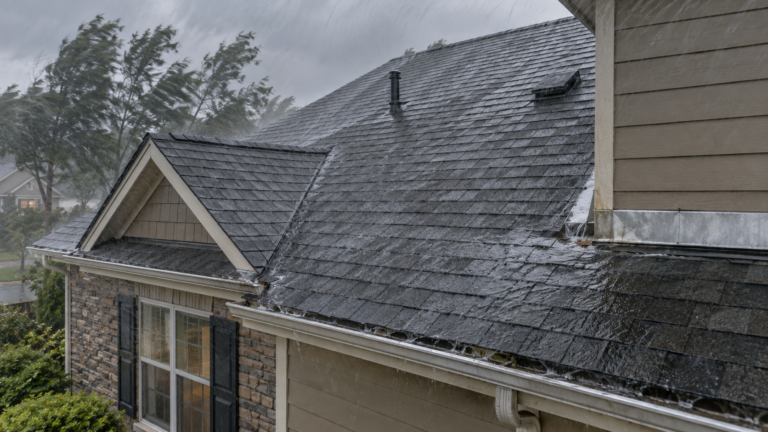
Roof leak only when the wind blows is a common homeowner concern because the roof may stay dry during normal rain but leak during windy storms. This usually means rain is being pushed sideways into a weak spot instead of falling straight down and draining off the roof normally.
Wind-driven rain can enter through lifted shingles, loose flashing, cracked pipe boots, roof vents, chimney flashing, siding transitions, roof valleys, or small gaps around roof penetrations. The leak may only appear during certain storms because the wind direction, rain intensity, and roof angle all affect where water gets pushed.
Kenneth Daniel Roofing helps homeowners evaluate roof leaks, storm damage concerns, roof repairs, roof replacement planning, gutters, siding, and other exterior issues. If your roof leaks only during windy rain, understanding the possible source can help you know when to schedule an inspection before the damage spreads.
Why Does My Roof Leak Only When the Wind Blows?
A roof leak only when the wind blows often happens because wind-driven rain is being forced under lifted shingles, behind loose flashing, around roof vents, through cracked pipe boots, into chimney flashing gaps, or near roof-to-wall transitions. The roof may not leak during light rain because water is not being pushed sideways into the weak area..
Why Wind-Driven Rain Leaks Are Different
Normal rainfall usually falls downward and follows the roof slope into gutters or away from the home. Wind-driven rain is different. Strong wind can push water sideways, upward, or into small openings that would not leak during calm rain.
That is why a roof leak only when the wind blows can be frustrating. The leak may not show up every time it rains. It may only happen when wind hits the home from a certain direction or when rain is heavy enough to overwhelm a weak roof detail.
1. Lifted or Loose Shingles
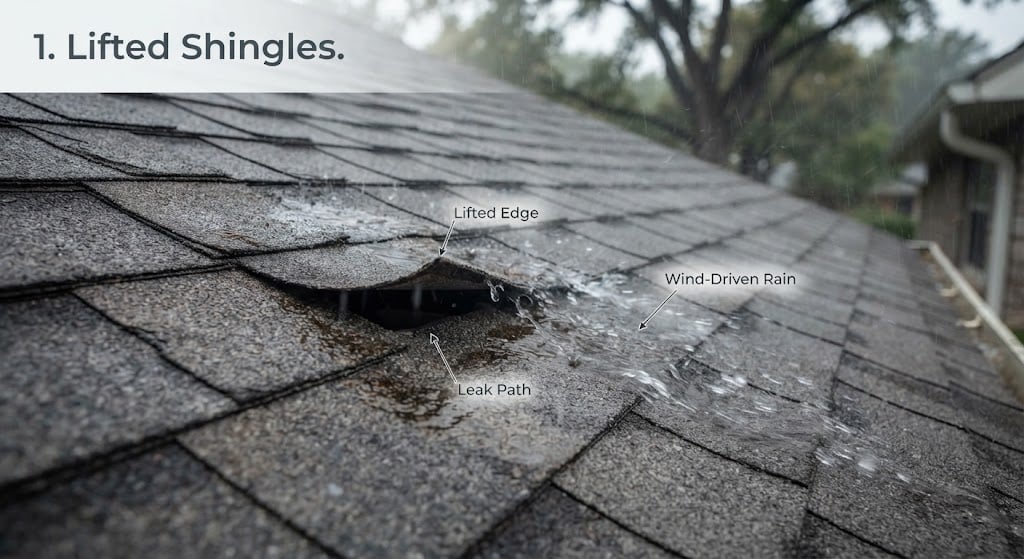
Lifted shingles are one of the most common reasons for a roof leak only when the wind blows. Wind can weaken the adhesive seal that helps shingles stay flat. Once a shingle lifts, wind-driven rain may push water underneath it.
Homeowners may notice:
Shingle edges that look raised: Wind may have broken the seal.
Loose or flapping tabs: These may allow water underneath during storms.
Leaks after windy rain: Water may enter only when wind pushes it sideways.
Missing shingles nearby: This may suggest storm damage in the same area.
What this may mean: If lifted shingles are limited to one area, repair may be possible. If the roof has widespread lifting, age, or storm damage, a larger roof evaluation may be needed.
Limitation Note: Lifted shingles can be difficult to confirm from the ground. Homeowners should avoid climbing onto the roof after rain or wind.
2. Loose or Damaged Flashing
Flashing protects areas where the roof meets another surface. These areas include chimneys, walls, skylights, dormers, vents, and roof edges. When flashing is loose, cracked, rusted, or poorly sealed, wind-driven rain can get behind it.
Flashing warning signs include:
Stains near walls or ceilings: Water may be entering through roof-to-wall flashing.
Loose metal edges: Flashing should sit tight and secure.
Cracked sealant: Old sealant may fail during windy rain.
Rust or discoloration: Metal components may be aging or exposed to moisture.
What this may mean: A roof leak only when the wind blows may point to flashing that works during normal rain but fails when water is pushed sideways.
Limitation Note: Water can travel along framing or insulation before appearing inside, so the ceiling stain may not be directly below the flashing problem.
3. Roof Vents and Pipe Boots Can Let Water In
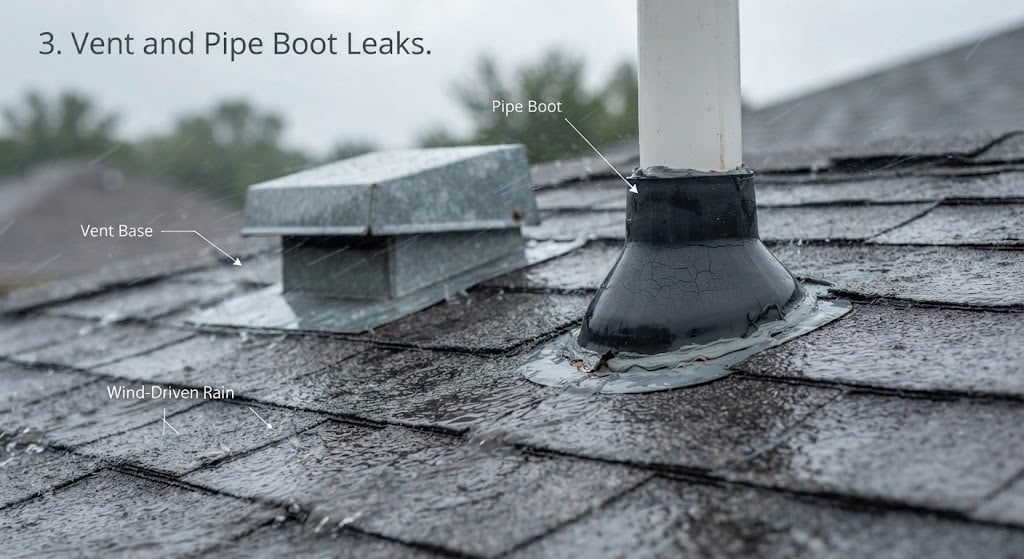
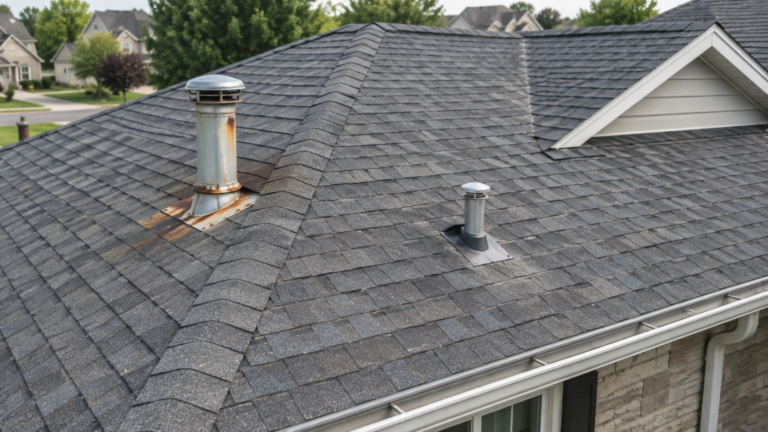
Roof vents, plumbing pipe boots, and exhaust penetrations create openings through the roof. These areas are sealed to keep water out, but rubber boots, sealant, flashing, and fasteners can wear down over time.
Possible warning signs include:
Cracked pipe boots: Rubber seals can split from age and sun exposure.
Loose vent bases: Movement can create small gaps.
Rust around fasteners: Rust may point to moisture exposure.
Bathroom or attic leaks: Leaks near plumbing vents may show indoors.
What this may mean: A roof penetration may stay dry during light rain but leak when wind pushes water against the opening.
Limitation Note: These leaks can be small at first, but repeated moisture can affect roof decking, insulation, and ceiling materials.
4. Chimney Flashing Can Leak During Windy Storms
Chimneys are common leak points because they create a large roof transition. Wind-driven rain can hit the chimney wall and push water behind flashing, mortar gaps, counterflashing, or worn sealant.
Chimney-related warning signs include:
Ceiling stains near the fireplace: Water may be entering near the chimney.
Rust near chimney flashing: Moisture may be reaching metal components.
Cracked sealant or mortar gaps: Water can enter during sideways rain.
Leaks only during certain wind directions: The chimney may leak only when rain hits from one side.
What this may mean: If the roof leak only when the wind blows appears near a fireplace, wall, or chimney chase, chimney flashing should be inspected.
Limitation Note: Chimney leaks can come from flashing, masonry, chimney caps, siding, or roof materials. The full area should be checked before choosing a repair.
5. Roof Valleys May Be Vulnerable During Heavy Wind-Driven Rain
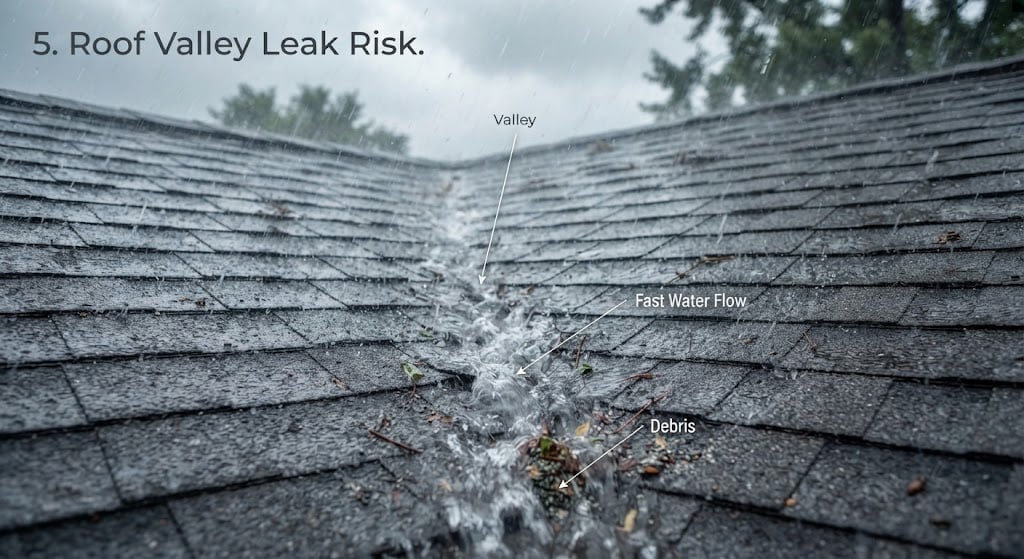
Roof valleys carry a large amount of water because they collect runoff from two roof slopes. During normal rain, water should move through the valley and off the roof. During windy rain, water can be pushed under shingles or into weak valley details.
Valley concerns may include:
Debris in valleys: Leaves and branches can slow drainage.
Uneven shingle wear: Valleys handle more water than many roof areas.
Leaks after steady wind and rain: Water may be getting under valley materials.
Dark staining along valley lines: This may show repeated moisture exposure.
What this may mean: Valley leaks can become worse during storms because water volume and wind pressure increase at the same time.
Limitation Note: Homeowners should not climb onto the roof to clear roof valleys. A professional can check drainage and inspect for damage safely.
6. Siding and Roof-to-Wall Transitions May Be Involved
Sometimes the source of a wind-driven rain leak is not the main roof surface. Water can enter where the roof meets siding, walls, dormers, windows, or trim. This is especially common when rain is blowing sideways against the home.
Warning signs may include:
Leaks near exterior walls: Water may be entering at a wall transition.
Stains near windows or corners: Wind may be pushing water behind trim or siding.
Loose siding near the roofline: Gaps can let water in.
Repeated leaks during storms from one direction: The wind-facing wall may be involved.
What this may mean: A roof leak only when the wind blows may actually involve roof flashing, siding, gutters, windows, or wall transitions working together.
Limitation Note: A roofing inspection may need to include nearby siding, gutters, trim, and wall areas to identify the true source.
7. Gutters and Roof Edges Can Back Up During Storms
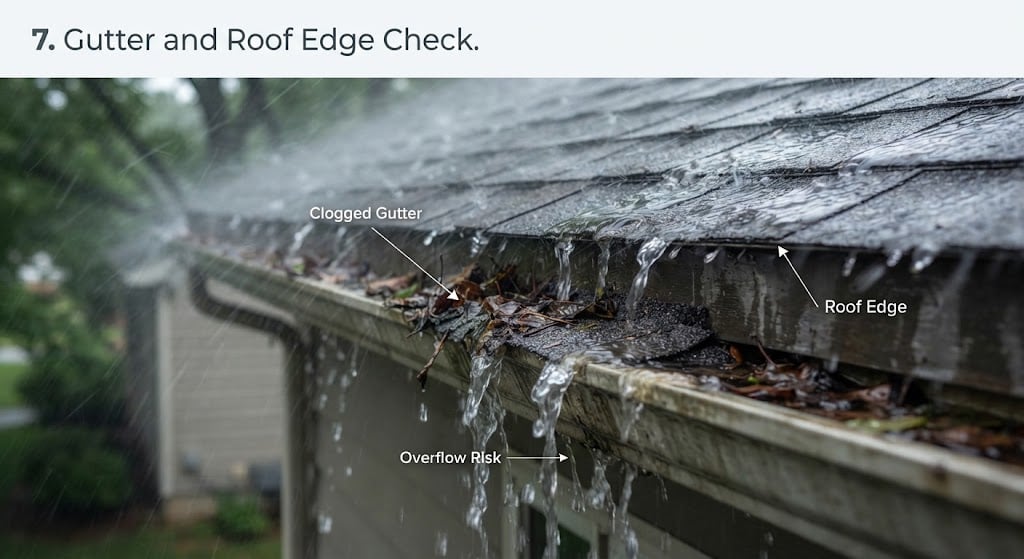
Gutters help move water away from the roof and home. If gutters are clogged, sagging, or overflowing during a windy storm, water can back up near the roof edge, fascia, soffits, or siding.
Gutter-related signs may include:
Water spilling over gutters: Overflow may point to a blockage.
Leaves and granules in gutters: Debris can slow drainage.
Stains near fascia or soffits: Moisture may be affecting the roof edge.
Leaks during heavy wind and rain: Water may be pushed where it does not normally go.
What this may mean: A gutter issue can sometimes look like a roof leak, especially when wind-driven rain pushes water toward the roof edge and exterior walls.
Limitation Note: Gutters, fascia, roof edges, shingles, and siding should be evaluated together when leaks happen only during storms.
Why the Leak May Not Happen Every Time It Rains
A roof leak only when the wind blows may depend on several conditions. The wind direction may have to hit a specific wall, roof slope, vent, or flashing area. The rain may need to be heavy enough. The storm may need to last long enough for water to find the weak point.
This is why some homeowners have trouble recreating the leak. The roof may stay dry during light rain but leak during storms with strong wind, sideways rain, or pressure against a vulnerable part of the home.
What Homeowners Can Check Safely From the Ground
Homeowners should not climb onto the roof during or after windy rain. Wet shingles, loose debris, and possible storm damage can make the roof unsafe.
From the ground, homeowners can look for:
Missing, lifted, or loose shingles
Debris in roof valleys
Rust or stains around vents and flashing
Loose siding or trim near rooflines
Clogged or overflowing gutters
Ceiling stains after windy storms
Leaks that happen only from one wind direction
If these signs are present, a professional inspection is the safest next step.
When to Schedule a Roof Inspection
You should schedule a roof inspection if you have a roof leak only when the wind blows, especially if the leak happens near flashing, vents, chimneys, valleys, exterior walls, roof edges, or after storms from a certain direction.
Kenneth Daniel Roofing helps homeowners with roof inspections, roof repairs, roof replacement planning, storm damage restoration, gutters, siding, and other exterior needs. If your roof leaks during windy rain but not during normal rain, an inspection can help determine whether the issue is related to shingles, flashing, roof penetrations, gutters, siding, or storm damage.
Contact Kenneth Daniel Roofing to get started.
Helpful External Resources for Homeowners
For additional homeowner education, review these trusted third-party resources:
National Weather Service thunderstorm safety guidance
Ready.gov severe weather preparedness guide
National Roofing Contractors Association
Limitation Note: General roofing and storm resources can help homeowners understand wind-driven rain concerns, but they cannot diagnose the exact source of one specific roof leak.
FAQ: Roof Leak Only When the Wind Blows
Why does my roof leak only when the wind blows?
Your roof may leak only when the wind blows because wind-driven rain is being pushed under lifted shingles, behind loose flashing, around roof vents, through pipe boots, into chimney flashing gaps, or near roof-to-wall transitions.
Can wind-driven rain cause a roof leak?
Yes. Wind-driven rain can push water sideways into small openings that may not leak during normal rain.
Why does my roof not leak during light rain?
Light rain may fall straight down and drain off the roof normally. During windy rain, water can be pushed into weak areas around shingles, flashing, vents, chimneys, gutters, or siding transitions.
Is a wind-driven rain leak serious?
It can be serious if water is entering the roof system, attic, insulation, ceiling, or wall areas. Even if the leak only happens during certain storms, it should be inspected.
When should I call a roofer for wind-driven rain leaks?
You should call a roofer if leaks happen during windy storms, if stains appear after rain from one direction, or if you notice missing shingles, loose flashing, clogged gutters, attic moisture, or storm damage signs.
Conclusion
A roof leak only when the wind blows can be confusing because the roof may stay dry during normal rain. But when strong wind pushes rain sideways, water can enter through weak shingles, flashing, vents, chimneys, roof valleys, siding transitions, gutters, or roof edges.
Not every wind-driven rain leak means the roof needs replacement, but every recurring leak deserves attention. A professional inspection can help identify whether the problem needs repair, flashing work, vent repair, gutter correction, siding review, or broader roof evaluation.
If you have a roof leak only when the wind blows, contact Kenneth Daniel Roofing to schedule an inspection and get clear guidance before the next windy storm causes more damage.
EXPLORE OUR RECENT ARTICLES

We’re Redefining Roofing. You In?