(434) 252-3783
Rust Around Roof Vents and Flashing: A Small Warning Sign Homeowners Shouldn’t Ignore
 9.15.26
 10 minutes read
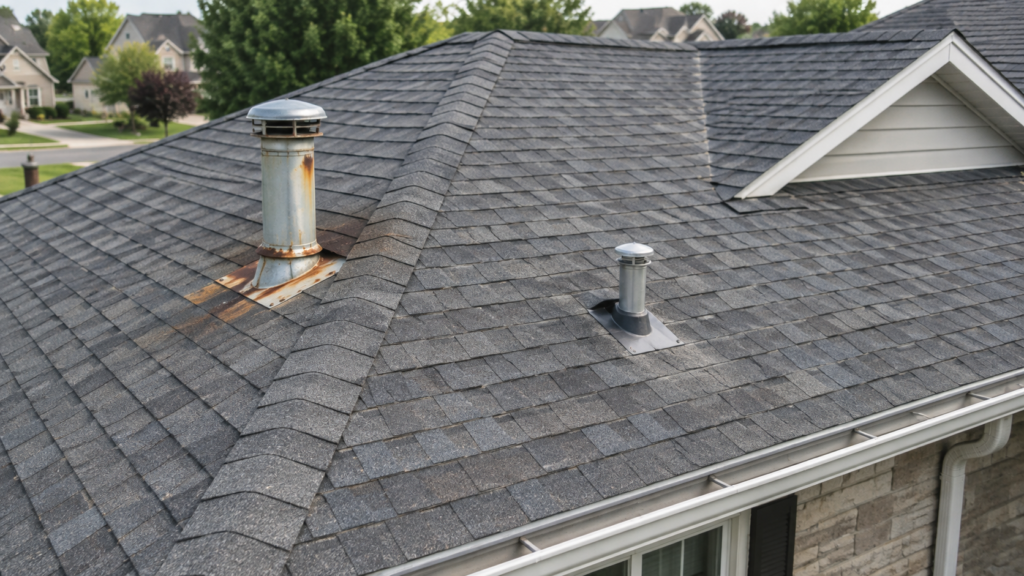
Rust around roof vents and flashing may look like a small cosmetic issue, but homeowners should not ignore it. Rust often appears when metal roofing components are exposed to moisture, aging sealant, poor drainage, storm wear, or long-term weather exposure.
In some cases, a little surface rust may not mean there is an active roof leak. But rust can also be an early warning sign that a roof vent, flashing area, fastener, pipe boot, or roof transition is starting to fail. If water gets behind these areas, it can move into the roof deck, attic, insulation, ceiling, or wall system before the problem becomes obvious indoors.
Kenneth Daniel Roofing helps homeowners evaluate roof concerns, roof repairs, roof replacement planning, storm damage restoration, gutters, siding, and other exterior needs. If you notice rust stains near roof vents, flashing, chimneys, or roof edges, it may be time to schedule a roof inspection before a small issue turns into water damage.
Quick Answer: Is Rust Around Roof Vents and Flashing a Problem?
Rust around roof vents and flashing can be a warning sign of moisture exposure, aging metal, loose flashing, failing sealant, damaged fasteners, or roof leak risk. Not every rust spot means the roof needs replacement, but rust should be inspected because it may show that water is sitting where it should not be.
Best Keyword Focus
Primary Keyword: rust around roof vents and flashing
Best Supporting Keyword: roof vent rust and flashing problems
These keywords match homeowners who are seeing rust stains, discoloration, or metal wear around roof vents, flashing, chimneys, pipe boots, or roof transition areas.
Why Rust on a Roof Should Be Taken Seriously
Metal roof components are designed to help protect vulnerable areas of the roof. Vents, flashing, fasteners, drip edge, chimney flashing, and other metal details help move water away from openings and transitions.
When rust appears, it may mean water is sitting too long, sealant is breaking down, metal coating has worn away, or the roof component is nearing failure. Rust around roof vents and flashing should be checked because these areas are common starting points for roof leaks.
1. Rust Can Point to Moisture Sitting Around Roof Vents
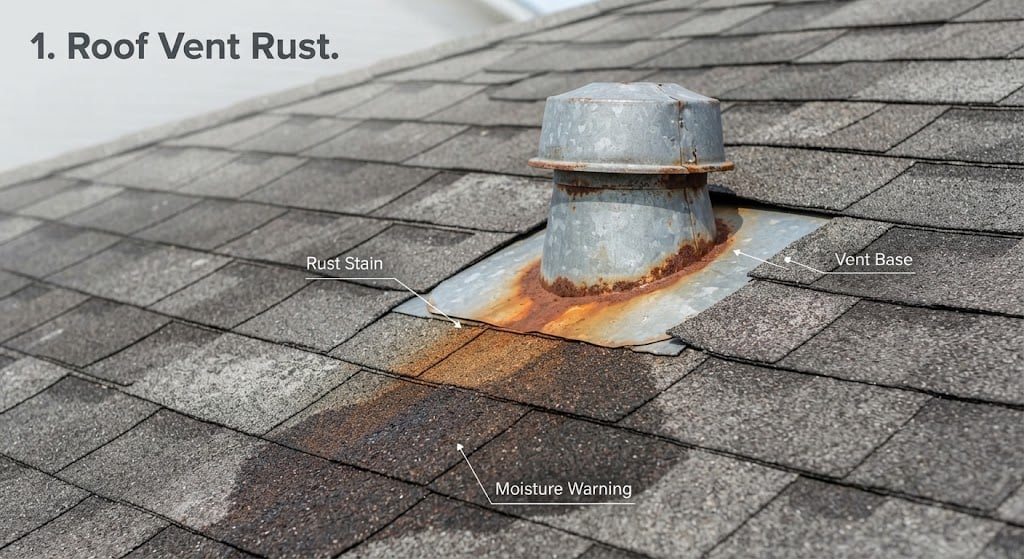
Roof vents help the attic breathe and allow air to move through the roofing system. But the area around a vent is also a common place for moisture problems because it includes a roof opening, sealant, flashing, fasteners, and surrounding shingles.
Homeowners may notice:
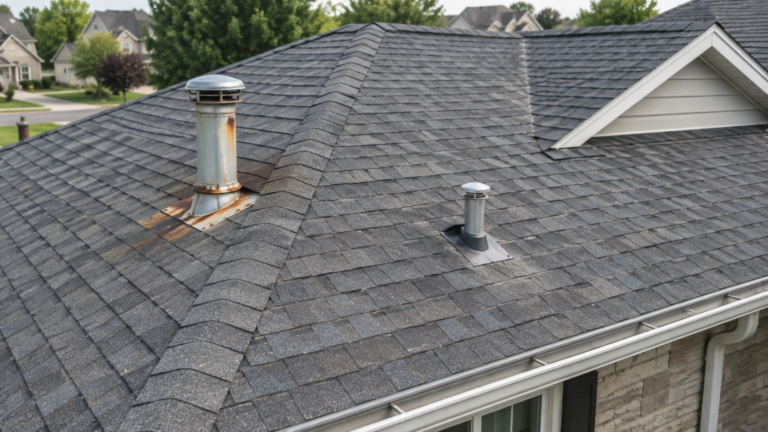
Orange or brown stains near the vent: This may suggest rust or water exposure.
Dark streaks below the vent: Water may be carrying rust down the roof surface.
Loose vent edges: A shifting vent can create openings for water.
Cracked sealant: Old sealant may no longer keep water out.
What this may mean: Rust around roof vents and flashing can suggest that water is reaching metal components or sitting around the vent longer than it should.
Limitation Note: Surface rust does not always mean there is an active leak, but it should be inspected before the metal weakens or water enters the roof system.
2. Flashing Rust May Mean a Roof Transition Is Weakening
Flashing protects areas where the roof changes direction or meets another surface. These areas include chimneys, walls, skylights, valleys, dormers, roof edges, and vents. If flashing starts to rust, separate, or lift, water may find a path underneath the shingles.
Common flashing warning signs include:
Rust stains near roof-to-wall areas: This may point to aging or exposed metal flashing.
Loose flashing edges: Flashing should sit tight and secure.
Cracked sealant: Sealant may dry out, shrink, or fail over time.
Interior stains near walls: These may point to flashing-related leaks.
What this may mean: Flashing rust can be more than a cosmetic issue because flashing protects some of the most leak-prone areas of the roof.
Limitation Note: Water can travel before appearing indoors, so the visible ceiling stain may not be directly below the flashing problem.
3. Rusted Fasteners Can Create Small Leak Paths
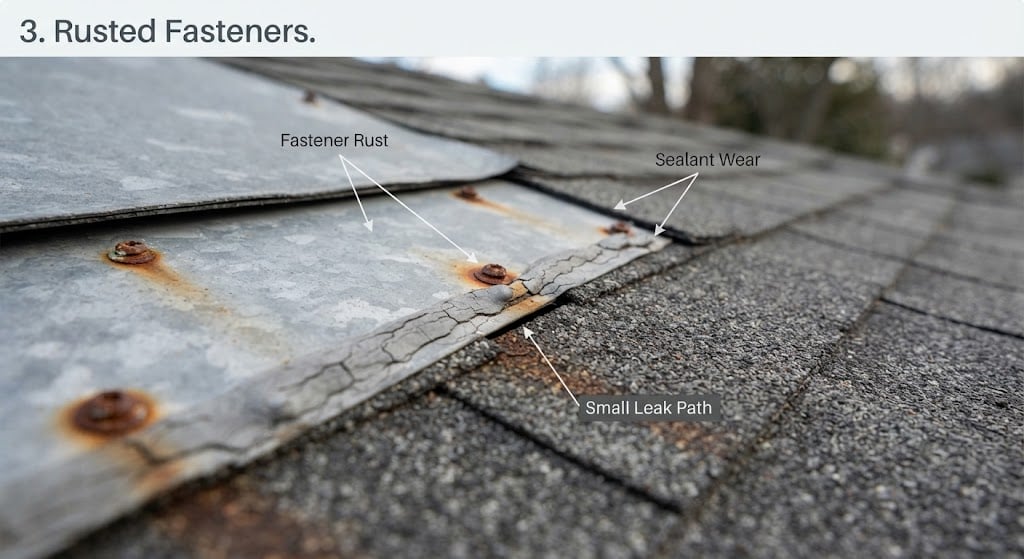
Fasteners help secure vents, flashing, and other roof components. When fasteners rust, they may loosen, expand, stain surrounding materials, or leave small openings where water can enter.
Rusted fastener signs may include:
Rust spots around screw heads: This may show metal deterioration.
Raised or loose fasteners: Movement can create tiny openings.
Cracked sealant around fasteners: Water may reach the fastener hole.
Rust trails below metal pieces: Rain may wash rust down the roof slope.
What this may mean: A small rusted fastener may seem minor, but it can become a leak point if water reaches the opening below.
Limitation Note: Homeowners should avoid pulling or moving roof fasteners. A professional can check whether the fastener, sealant, or surrounding material needs repair.
4. Rust May Show That Sealant Has Failed
Roof sealant is often used around flashing, vents, pipe boots, and roof transitions. Over time, sealant can crack, shrink, dry out, or pull away from the surface. Once that happens, water can reach metal components and begin causing rust.
Sealant failure may show as:
Cracked caulk lines: Old sealant may split from age and sun exposure.
Gaps around vents or flashing: Water may enter through exposed openings.
Rust near sealed areas: Moisture may be reaching metal behind the sealant.
Recurring stains: Rust or moisture marks may return after rain.
What this may mean: If rust around roof vents and flashing appears near old sealant, the roof may need targeted repair before water moves deeper into the roof system.
Limitation Note: Adding more sealant over old failed sealant may not solve the real issue. The area should be inspected and repaired correctly.
5. Rust Stains Can Be a Clue After Storm Damage
Storms can loosen flashing, shift vents, damage fasteners, and expose metal surfaces. After wind, hail, heavy rain, or falling branches, rust may appear more noticeably because water is reaching areas that were previously protected.
Storm-related signs may include:
Lifted shingles near flashing: Wind may have weakened nearby shingles.
Dented vents or metal caps: Hail or debris may damage coatings.
Loose flashing edges: Storm movement can create gaps.
New rust after heavy rain: Moisture may be reaching exposed metal.
What this may mean: If rust appears after a storm, the roof should be checked for hidden damage around vents, flashing, shingles, gutters, and roof transitions.
Limitation Note: Not every storm causes roof damage, and not every rust stain is storm-related. A roof-specific inspection can help confirm the cause.
6. Rust Around Chimney Flashing Should Not Be Ignored
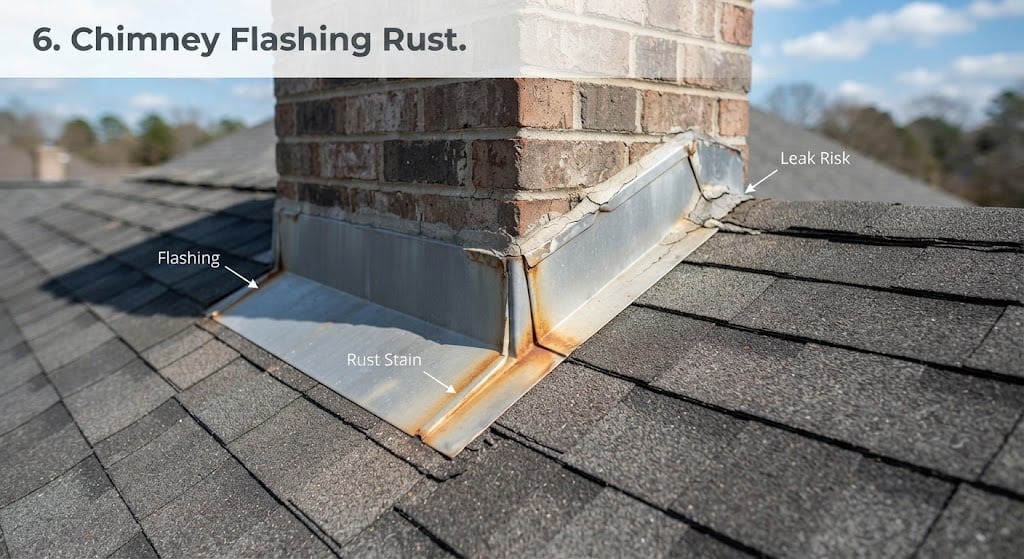
Chimney flashing is one of the most important roof leak protection areas. Because the chimney creates a vertical transition through the roof, flashing must be secure, properly sealed, and free from gaps.
Warning signs may include:
Rust near the chimney base: Metal flashing may be aging or exposed.
Loose counterflashing: Flashing may separate from the chimney surface.
Cracked sealant or mortar gaps: Water may enter around the chimney.
Ceiling stains near the fireplace or walls: These may point to chimney flashing leaks.
What this may mean: Chimney flashing rust can lead to interior water damage if water reaches the roof deck, attic, ceiling, or wall system.
Limitation Note: Chimney leaks can come from flashing, masonry, caps, or roof materials. The full area should be inspected before choosing a repair.
7. Rust Can Spread if the Source Is Not Fixed
Rust is often a sign that metal has already been exposed to moisture. If the source of that moisture is not corrected, rust may continue to spread, weaken the component, or create more staining around the roof.
Potential risks include:
Weakened metal: Rust can thin or damage flashing and vents over time.
Larger leak paths: Gaps may grow as materials deteriorate.
Stains on shingles or siding: Rust runoff can discolor nearby surfaces.
Hidden moisture damage: Water may affect decking or attic materials.
What this may mean: The goal is not only to remove rust stains, but to identify why the rust appeared and whether the roof component still protects the home.
What Homeowners Can Check From the Ground
Homeowners should avoid climbing onto the roof to inspect rusted vents or flashing. Metal areas can be slippery, and rust may be near weak or leak-prone roof sections.
From the ground, homeowners can look for:
Orange or brown stains near vents
Rust trails running down shingles
Discoloration near chimney flashing
Loose or raised metal edges
Dark stains near roof transitions
Ceiling stains, attic moisture, or musty odors inside
If several signs are present, a professional inspection is the safest next step.
When to Schedule a Roof Inspection
You should schedule a roof inspection if you notice rust around roof vents and flashing, rust stains near chimneys, loose metal flashing, cracked sealant, roof leaks, attic moisture, ceiling stains, or rust trails running down shingles.
Kenneth Daniel Roofing helps homeowners with roof inspections, roof repairs, roof replacement planning, storm damage restoration, gutters, siding, and other exterior needs. If rust is showing around your vents or flashing, an inspection can help determine whether the issue is surface-level, moisture-related, storm-related, or part of a larger roof problem.
Contact Kenneth Daniel Roofing to get started.
Helpful External Resources for Homeowners
For additional homeowner education, review these trusted third-party resources:
National Roofing Contractors Association
Ready.gov severe weather preparedness guide
National Weather Service thunderstorm safety guidance
Limitation Note: General roofing and storm resources can help homeowners understand roof concerns, but they cannot diagnose the exact cause of rust on one specific roof.
FAQ: Rust Around Roof Vents and Flashing
Is rust around roof vents and flashing serious?
Rust around roof vents and flashing can be serious if it points to moisture exposure, failing sealant, loose flashing, damaged fasteners, or leak risk. It should be inspected before the issue spreads.
Can rust around flashing cause a roof leak?
Yes. If flashing rusts, loosens, or separates from the roof surface, water may enter around roof transitions, vents, chimneys, walls, or nearby shingles.
Why are my roof vents rusting?
Roof vents may rust because of age, moisture exposure, worn coating, storm damage, poor drainage, failing sealant, or long-term weather exposure.
Can I just paint over roof rust?
Painting over rust may hide the stain temporarily, but it does not fix the source of the moisture or determine whether the vent, flashing, or fastener is still protecting the roof.
When should I call a roofer about rust on my roof?
You should call a roofer if you see rust near vents, flashing, chimneys, pipe boots, roof edges, or any area connected to leaks, attic moisture, ceiling stains, or storm damage signs.
Conclusion
Rust around roof vents and flashing may seem small, but it can be an early warning sign that moisture is reaching metal roof components. Rust may point to aging vents, loose flashing, failing sealant, damaged fasteners, storm damage, or roof leak risk.
Not every rust stain means the roof needs replacement, but every visible rust concern deserves attention. A professional inspection can help identify whether the issue needs cleaning, repair, flashing work, vent replacement, or broader roof evaluation.
If you notice rust around roof vents and flashing on your home, contact Kenneth Daniel Roofing to schedule an inspection and get clear guidance before a small warning sign becomes a bigger roof problem.
EXPLORE OUR RECENT ARTICLES
We’re Redefining Roofing. You In?