(434) 252-3783
The Most Common Roof Problems We Find in Midlothian After Summer Storms
 9.8.26
 10 minutes read
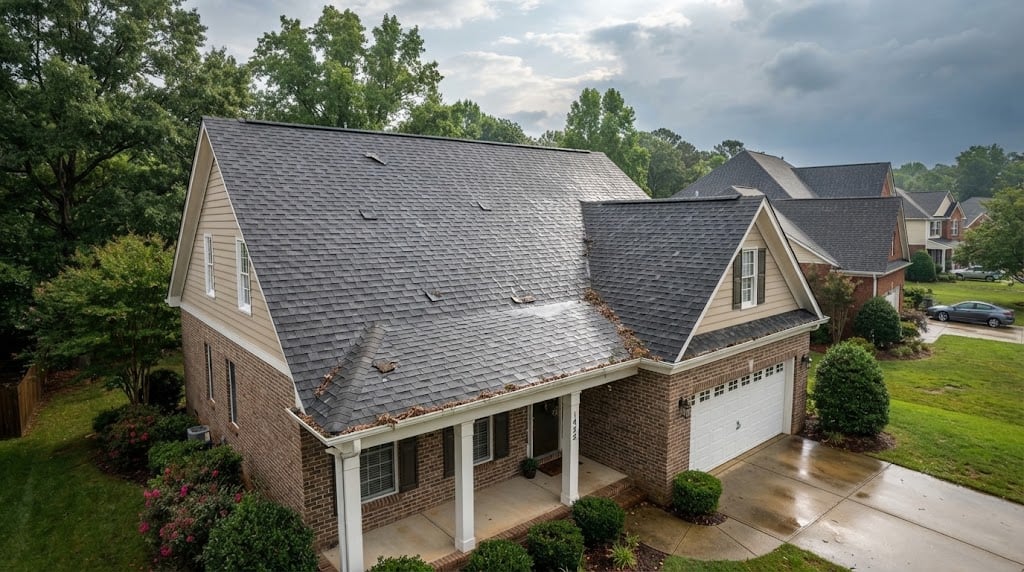
Midlothian roof problems after summer storms are not always easy to spot from the ground. A roof may look fine at first, but wind, heavy rain, humidity, falling limbs, and repeated storms can leave behind small issues that become more serious over time.
For many Midlothian homeowners, roof concerns start with something simple: a few shingles look lifted, granules show up in the gutters, a ceiling stain appears after rain, or debris collects near the roof edge. These signs may not always mean the roof needs replacement, but they do mean the roof should be checked before the next storm makes the problem worse.
Kenneth Daniel Roofing helps homeowners in Midlothian and nearby Richmond-area communities evaluate roof concerns, storm damage, repairs, replacement planning, and related exterior issues. If your home has been through a rough summer storm season, knowing what to look for can help you decide when it is time for a closer inspection.
Quick Answer: What Roof Problems Are Most Common in Midlothian After Summer Storms?
The most common roof problems in Midlothian after summer storms include lifted shingles, missing shingles, granule loss, cracked shingles, loose flashing, clogged gutters, roof stains, attic moisture, ceiling stains, and hidden storm damage. These issues can start small but may lead to leaks or more expensive repairs if they are ignored.
Why Summer Storms Can Be Hard on Midlothian Roofs
Summer storms can stress a roof in several ways at once. Wind can lift shingles, heavy rain can expose weak flashing, humidity can contribute to moisture problems, and falling limbs can damage roof surfaces or gutters. Even when a storm does not look severe, repeated weather can slowly weaken older roofing materials.
By late summer or early fall, homeowners may begin to notice signs that were not obvious earlier in the season. The key is knowing which roof problems are common, which signs are urgent, and when a professional inspection makes sense.
1. Lifted or Loose Shingles
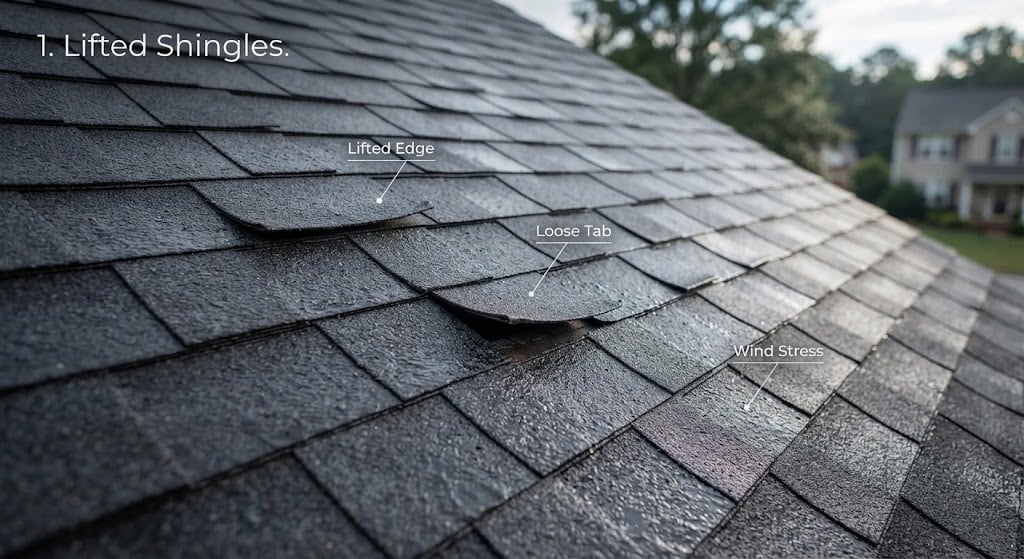
Lifted shingles are one of the most common roof problems after summer storms. Wind can weaken the adhesive seal that helps shingles stay flat and secure. Once that seal is broken, rain may have an easier path underneath the roofing material.
Homeowners may notice:
Shingle edges that look raised: This may suggest wind has weakened the seal.
Tabs that no longer lie flat: Loose tabs can become worse during the next storm.
Patchy roof sections: Uneven areas may need closer review.
New leaks after wind-driven rain: Lifted shingles can allow water intrusion.
What this may mean: Lifted shingles may be repairable if the issue is limited, but widespread lifting can point to storm damage, aging shingles, or a larger roof concern.
Limitation Note: Lifted shingles can be difficult to confirm from the ground. Homeowners should avoid climbing onto the roof and schedule an inspection if damage is suspected.
2. Missing or Cracked Shingles
Missing or cracked shingles are easier to notice than some other roof problems, but they are still sometimes overlooked. A missing shingle exposes part of the roof system to rain. A cracked shingle may still be in place, but it may no longer shed water properly.
After summer storms, look for:
Bare patches on the roof: These may indicate missing shingles.
Cracked shingle surfaces: Heat, age, and storm impact can make shingles brittle.
Pieces of shingles in the yard: Wind may have torn loose material away.
Uneven roof color: Damaged or missing shingles can make roof sections look patchy.
What this may mean: Small isolated damage may only need repair, but repeated missing or cracked shingles across multiple areas may suggest a bigger roof issue.
Limitation Note: A roof can have storm damage even if no shingles are fully missing. Cracks, bruising, and lifted edges can be more subtle.
3. Granule Loss in Gutters and Downspouts
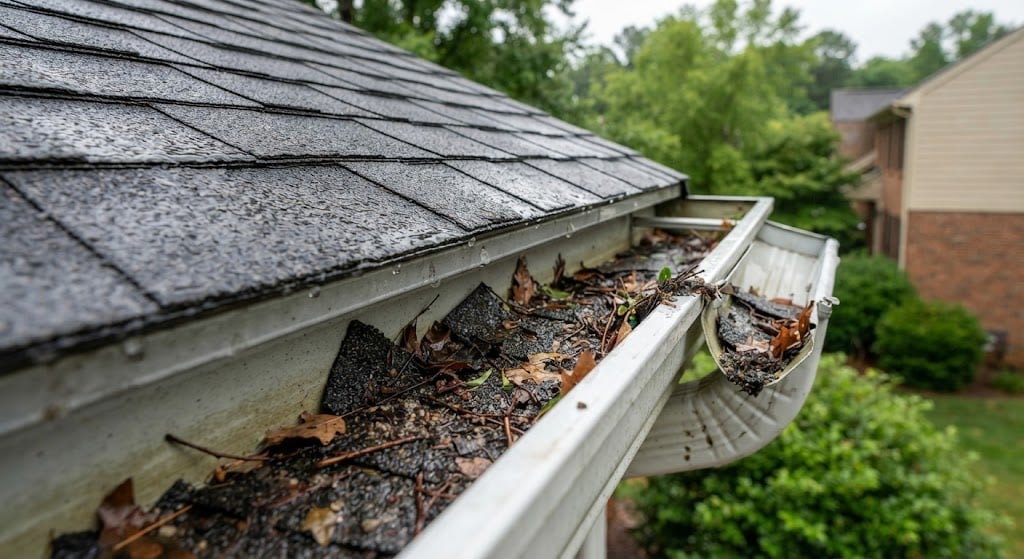
Granules are the protective outer layer of asphalt shingles. They help shield shingles from sun exposure and weather. After summer storms, homeowners may notice dark, sandy material in gutters or near downspouts.
Granule loss may show up as:
Dark particles in the gutter: These may be loose shingle granules.
Granules near downspout exits: Rain can wash them to the ground.
Patchy roof color: Missing granules can make shingles look uneven.
Sudden buildup after storms: This may suggest hail, heavy rain, or accelerated wear.
What this may mean: Some granule loss is normal over time, but heavy or sudden granule buildup can point to shingle wear or storm-related roof damage.
Limitation Note: The amount, timing, and roof age matter. A small amount of granules is not always an emergency, but heavy buildup should be checked.
4. Loose or Damaged Flashing
Flashing protects vulnerable roof areas where water could enter. It is commonly installed around chimneys, skylights, roof-to-wall transitions, vents, and other roof penetrations. Summer storms can loosen flashing, while heat and age can cause sealant to crack or shrink.
Common flashing warning signs include:
Gaps around chimneys or walls: Water can enter through separated flashing.
Loose metal edges: Flashing should stay secure and tight.
Cracked sealant: Old sealant may no longer protect the transition.
Interior stains near walls: These may suggest flashing-related leaks.
What this may mean: Flashing problems are a common source of roof leaks and should be addressed before repeated rain pushes water inside.
Limitation Note: Water can travel along framing or insulation before appearing indoors, so the visible stain may not be directly below the damaged flashing.
5. Clogged Gutters and Roof Edge Drainage Issues
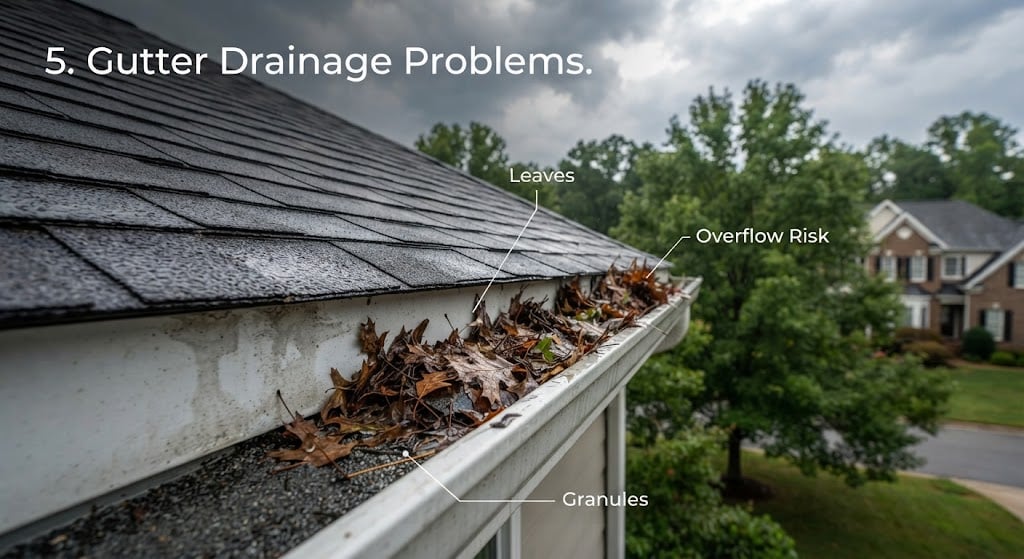
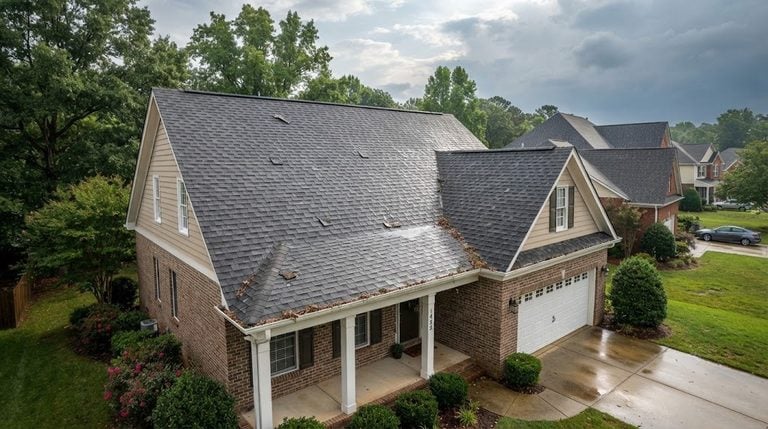
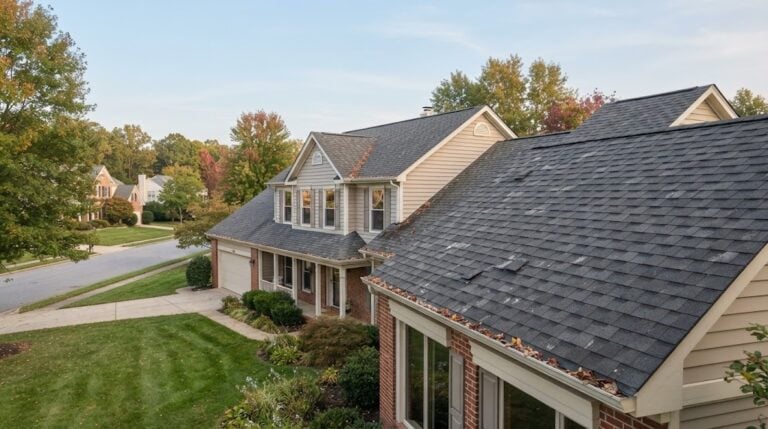
Gutters play a major role in moving water away from the roof and home. After storms, gutters can fill with leaves, twigs, roof granules, and other debris. When water cannot drain properly, it may back up near the roof edge, fascia, soffits, or siding.
Warning signs include:
Water spilling over gutters: Overflow may mean drainage is blocked.
Sagging gutter sections: Debris and trapped water can add weight.
Stains near fascia or soffits: Repeated overflow can leave marks.
Debris at roof edges: Leaves and branches can trap moisture.
What this may mean: Gutter problems can contribute to roof-edge leaks, fascia damage, siding moisture, and foundation drainage concerns.
Limitation Note: A gutter issue can sometimes look like a roof leak from inside the home. Gutters, shingles, roof edges, and fascia should be evaluated together.
6. Attic Moisture or Ceiling Stains
Some roof problems appear inside before they are obvious outside. If water has entered the roof system, homeowners may notice attic moisture, musty odors, damp insulation, or ceiling stains after storms.
Interior signs may include:
Brown or yellow ceiling stains: These may point to water intrusion.
Damp insulation: Wet insulation may indicate an active moisture issue.
Dark roof decking stains: Staining may show past or current water movement.
Musty attic smells: Dampness can create a lingering odor.
What this may mean: Attic moisture may be connected to a roof leak, ventilation issue, flashing failure, storm damage, or condensation problem.
Limitation Note: Attic moisture does not always mean the roof is leaking. Ventilation, humidity, ductwork, or condensation may also be involved.
7. Hidden Storm Damage That Gets Worse Later
One of the hardest things about storm-related roof damage is that it may not cause a leak immediately. A roof can have weakened shingles, loosened flashing, hail impact, or damaged roof edges without showing obvious interior damage right away.
Hidden storm damage may include:
Small hail impact marks: These may weaken shingles over time.
Loose shingles: Wind may break the seal without removing the shingle.
Minor flashing separation: Small gaps may leak during later storms.
Debris impact: Branches can damage shingles or gutters without being obvious later.
What this may mean: Storm damage should be documented and reviewed early so homeowners can understand whether repair, monitoring, or replacement planning makes sense.
Limitation Note: Not every storm causes roof damage, and not every damaged roof needs replacement. A roof-specific inspection is the safest way to confirm the issue.
What Midlothian Homeowners Can Check From the Ground
Homeowners should avoid climbing onto the roof after storms. A safe ground-level review can still reveal helpful clues.
Look for missing, lifted, or cracked shingles.
Check gutters and downspouts for granules or debris.
Look for sagging gutters or staining near fascia.
Watch for debris sitting near roof valleys or roof edges.
Check ceilings and attic areas for moisture signs.
Look for branches, fallen limbs, or damaged exterior areas.
If several signs are present, it may be time to schedule a professional roof inspection.
Midlothian and Nearby Richmond-Area Communities
This topic is especially relevant for homeowners in Midlothian, Chesterfield, Richmond, Glen Allen, Ashland, Petersburg, South Hill, and surrounding Central Virginia communities.
Homes in the Richmond area can experience summer thunderstorms, humidity, heavy rain, wind, falling limbs, and seasonal temperature changes. These conditions can leave behind roof concerns that may not become obvious until the next round of rain.
When to Schedule a Roof Inspection After Summer Storms
You should consider scheduling a roof inspection if your Midlothian roof has missing shingles, lifted shingles, granule loss, clogged gutters, flashing concerns, attic moisture, ceiling stains, roof leaks, or visible storm damage signs.
Kenneth Daniel Roofing helps homeowners with roof inspections, roof repairs, roof replacement planning, storm damage restoration, gutters, siding, and other exterior needs. If you are unsure whether your roof problem is minor or serious, an inspection can help you make a clearer decision.
Contact Kenneth Daniel Roofing to get started.
Helpful External Resources for Homeowners
For additional homeowner education, review these trusted third-party resources:
National Weather Service thunderstorm safety guidance
Ready.gov severe weather preparedness guide
National Roofing Contractors Association
Limitation Note: General roofing resources can help homeowners understand storm and roof damage concerns, but they cannot diagnose the condition of one specific home.
FAQ: Midlothian Roof Problems After Summer Storms
What roof problems are common in Midlothian after summer storms?
Common roof problems include lifted shingles, missing shingles, cracked shingles, granule loss, loose flashing, clogged gutters, attic moisture, ceiling stains, and hidden storm damage.
Can summer storm damage happen without a roof leak?
Yes. A roof can have lifted shingles, hail impact, loose flashing, or granule loss before an active leak appears inside the home.
Are granules in gutters a bad sign?
Granules can be normal in small amounts, especially as shingles age. However, heavy or sudden granule buildup after a storm may suggest roof wear or storm damage.
Should I inspect my roof myself after a storm?
You can check from the ground for missing shingles, gutter debris, ceiling stains, or visible damage, but you should avoid climbing onto the roof. A professional inspection is safer and more complete.
When should I schedule a roof inspection in Midlothian?
You should schedule a roof inspection if you notice missing shingles, lifted shingles, leaks, granules in gutters, attic moisture, loose flashing, or storm damage signs after summer storms.
Conclusion
The most common roof problems we find in Midlothian after summer storms are often easy to overlook at first. Lifted shingles, missing shingles, granule loss, loose flashing, clogged gutters, attic moisture, and hidden storm damage can all start small but become more serious with repeated rain and wind.
Not every roof problem requires replacement, but every visible warning sign deserves attention. A roof inspection can help homeowners understand whether repair, maintenance, monitoring, or replacement planning is the right next step.
If your Midlothian-area roof has been through summer storms, contact Kenneth Daniel Roofing to schedule an inspection and get clear guidance before small issues become bigger problems.
EXPLORE OUR RECENT ARTICLES
We’re Redefining Roofing. You In?