(434) 944-6005
7 Ways To Perform Commercial Roof Cleaning (Safety Tips & More)
 3.6.26
 8 minutes read

Maintaining a commercial property involves more than interior upkeep. Roof maintenance is equally important, especially when debris, algae, and standing water begin to accumulate. Commercial roof cleaning helps preserve roofing materials, improve drainage, and prevent costly structural damage. Many property owners researching long term building protection strategies that routine roof cleaning plays a critical role in extending the life of a commercial roofing system.
In this guide, you will learn:
- Why regular commercial roof cleaning protects your building
- Seven effective methods professionals use to clean commercial roofs
- Safety considerations that property owners should understand
- Preventative maintenance practices that keep roofs cleaner longer
- How professional roof care can extend roofing system lifespan
Why Commercial Roof Cleaning Is Important for Building Maintenance
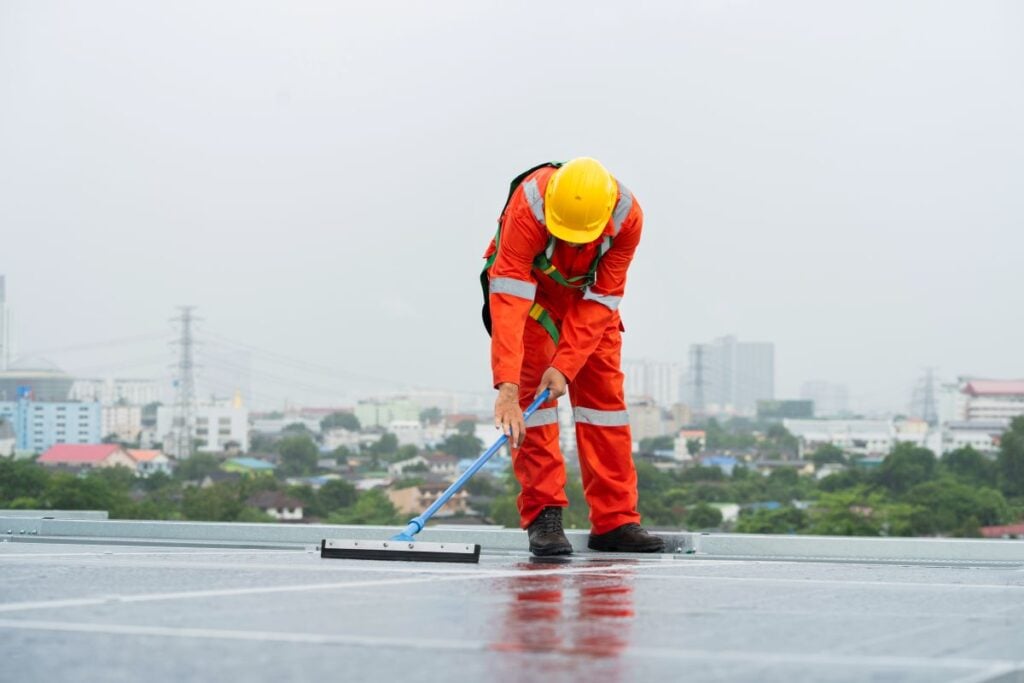
Commercial roofs face constant exposure to weather, debris, and environmental contaminants. Over time, leaves, dirt, algae, and standing water can accumulate on the surface, creating conditions that may damage roofing materials or interfere with drainage systems.
Routine cleaning helps prevent these problems and keeps the roofing system functioning properly. It also provides an opportunity to inspect the roof for early signs of wear or damage.
There are several major advantages to maintaining a clean commercial roof.
- Improved Drainage: Removing debris ensures water can flow freely toward drains and gutters, reducing the risk of ponding water.
- Extended Roof Lifespan: Dirt, algae, and organic buildup can degrade roofing materials over time. Cleaning helps preserve membrane integrity.
- Leak Prevention: Regular cleaning exposes hidden damage or blocked drainage points that might otherwise lead to leaks.
- Better Energy Efficiency: Clean roof surfaces can reflect sunlight more effectively, helping regulate building temperatures.
- Enhanced Property Appearance: A clean roof contributes to the professional look of commercial properties.
For property owners in Tarboro, NC and surrounding areas, routine roof maintenance can be especially beneficial during seasons with heavy rain and falling debris.
7 Effective Ways to Perform Commercial Roof Cleaning
Commercial roofs vary in size, materials, and slope, which means cleaning methods must be carefully selected to avoid damaging the roofing system. Professional contractors typically use several techniques depending on the roof design and level of buildup.
Below are seven commonly used approaches for cleaning commercial roofs safely and effectively.
1. Manual Debris Removal
Manual debris removal is often the first step in cleaning a commercial roof. Large debris such as leaves, branches, and trash must be cleared before deeper cleaning methods can begin.
This process typically involves:
- Using soft bristle brooms or blowers to remove loose debris
- Clearing debris from roof corners and drainage areas
- Removing branches or organic buildup trapped around rooftop equipment
Manual cleaning reduces the risk of clogged drains and prepares the roof for additional maintenance.
2. Low Pressure Washing
Low pressure washing is commonly used to remove dirt, dust, and light organic buildup from commercial roofs. Unlike high pressure washing, this method uses controlled water pressure to avoid damaging roofing membranes.
Contractors often focus on:
- Washing roof surfaces gradually to prevent membrane stress
- Avoiding seams and flashing areas that may be vulnerable
- Directing water toward drains to assist in debris removal
This method is especially useful for large flat roof surfaces.
3. Soft Washing for Organic Growth
Soft washing is used when roofs develop algae, mold, or moss growth. Instead of relying on pressure, soft washing uses specialized cleaning solutions to break down organic contaminants.
The process usually includes:
- Applying a biodegradable cleaning solution
- Allowing time for the solution to dissolve buildup
- Rinsing the roof gently to remove residue
Soft washing helps eliminate biological growth while protecting delicate roofing materials.
4. Drain and Gutter Cleaning
Drainage systems are a critical part of commercial roof performance. When drains and gutters become blocked, water can accumulate and damage the roofing structure.
Cleaning these systems typically involves:
- Removing debris from drain openings
- Flushing downspouts with water to remove blockages
- Checking for signs of corrosion or damage
Maintaining drainage components ensures water flows safely away from the building.
5. Algae and Moss Treatment
In humid climates, algae and moss can grow quickly on roofing surfaces. If left untreated, these organisms can trap moisture and accelerate roof deterioration.
Treatment methods may include:
- Applying algae resistant cleaning solutions
- Removing thick moss patches manually
- Inspecting affected areas for hidden membrane damage
This treatment helps maintain roof health and prevent moisture related deterioration.
6. Equipment Area Cleaning
Commercial roofs often contain HVAC systems, vents, and mechanical equipment that collect dirt and debris. Cleaning these areas is essential because debris accumulation can block airflow or trap moisture.
Professionals usually:
- Remove debris around equipment bases
- Clear drainage channels near rooftop units
- Inspect flashing around equipment mounts
Maintaining these areas reduces the risk of water infiltration.
7. Professional Roof Inspection During Cleaning
Cleaning a commercial roof provides an ideal opportunity for a detailed inspection. Contractors can identify early warning signs of damage that may require repair.
Inspection points often include:
- Membrane seams and flashing
- Roof penetrations and vents
- Areas with previous repairs
- Drainage systems and gutters
Many property owners in Tarboro, NC and surrounding areas schedule inspections during roof cleaning appointments to ensure their roofing systems remain in good condition.
Safety Considerations for Commercial Roof Cleaning
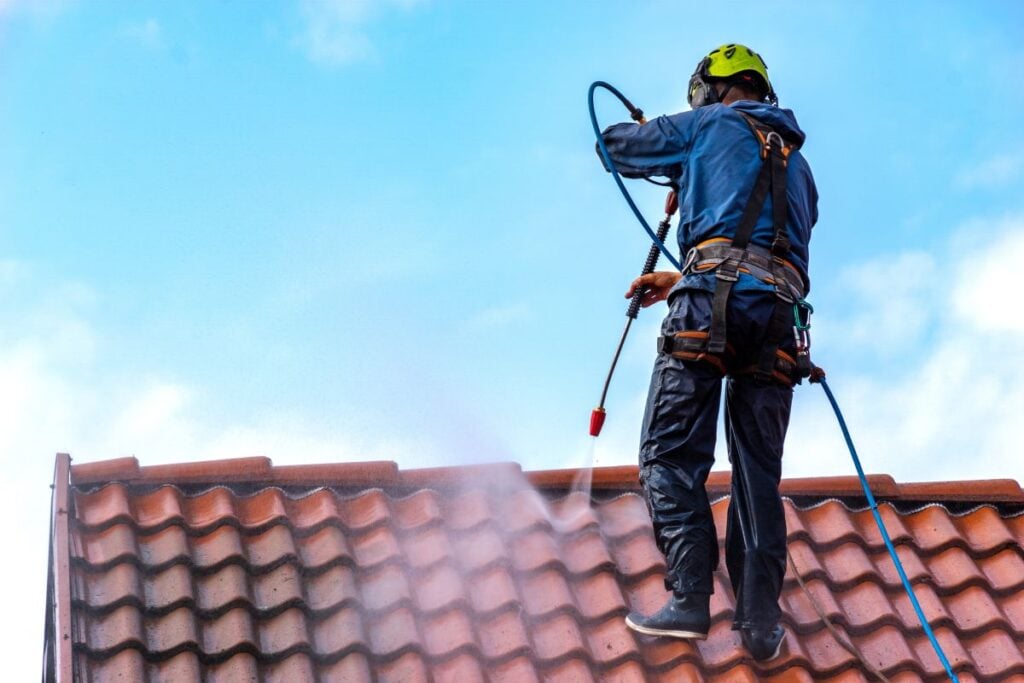
Cleaning a commercial roof involves working at height and navigating potentially slippery surfaces. Safety should always be a top priority during roof maintenance activities.
Understanding key safety considerations helps prevent accidents and protects both workers and the roofing structure.
Use Proper Fall Protection
Fall protection equipment is essential when working on commercial roofs.
Safety measures often include:
- Guardrails or safety barriers
- Safety harnesses and anchor points
- Non slip footwear
Professional contractors follow strict safety protocols to reduce risks.
Avoid Harsh Chemicals
Certain cleaning chemicals can damage roofing membranes or cause discoloration.
Professionals typically choose cleaning solutions that are compatible with the roofing material to avoid unintended damage.
Protect Roofing Membranes
Walking on roofing membranes improperly can puncture or weaken the material.
Contractors often use designated walk paths or protective mats to distribute weight and prevent damage.
Monitor Weather Conditions
Roof cleaning should not be performed during severe weather conditions. Wet surfaces combined with strong winds increase the risk of accidents.
Most cleaning projects are scheduled during calm weather to ensure safe working conditions.
Ensure Proper Drainage During Cleaning
Water used during the cleaning process must flow toward drains rather than pooling on the roof.
Professionals monitor drainage carefully during cleaning to prevent water accumulation.
Preventative Maintenance to Reduce Roof Cleaning Needs
Although cleaning is necessary, preventative maintenance can reduce how often major cleaning is required. Proactive care helps keep commercial roofs in better condition throughout the year.
Property owners who follow preventative maintenance plans often experience fewer roofing issues.
Key maintenance strategies include:
- Routine Debris Removal: Clearing leaves and debris regularly prevents buildup that leads to clogged drains.
- Seasonal Inspections: Checking the roof twice per year allows early detection of drainage issues.
- Gutter Maintenance: Clean gutters support efficient water drainage from the roof system.
- Vegetation Control: Trimming nearby trees reduces the amount of organic debris falling onto the roof.
- Equipment Monitoring: Inspecting rooftop equipment ensures debris does not accumulate around mechanical units.
Businesses in Tarboro, NC and surrounding areas often benefit from seasonal maintenance programs that keep roofs clear of debris during heavy rainfall seasons.
Comparing Roof Cleaning Methods for Different Roof Types
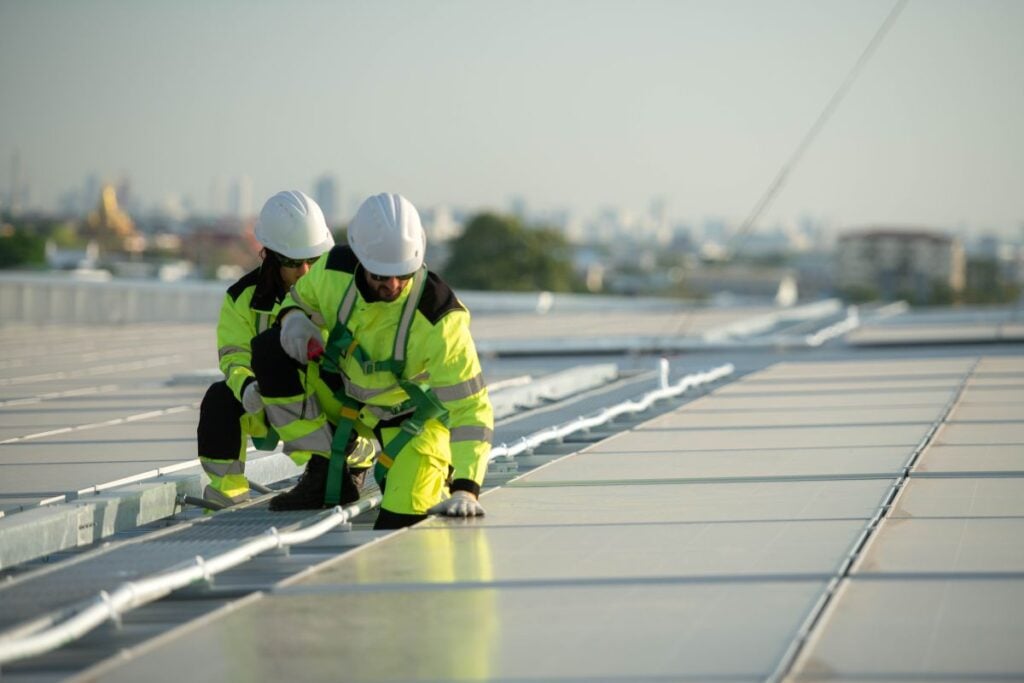
Different commercial roofing materials require different cleaning techniques. Choosing the correct method protects the roof while ensuring effective results.
Below is a comparison of common cleaning approaches used on commercial roofing systems.
| Cleaning Method | Best For | Advantages | Considerations |
| Manual Debris Removal | All roof types | Safe for membranes | Labor intensive |
| Low Pressure Washing | Large flat roofs | Removes dirt quickly | Must control water pressure |
| Soft Washing | Algae or moss growth | Gentle on materials | Requires cleaning solutions |
| Drain Cleaning | Drainage systems | Prevents water buildup | Needs regular monitoring |
| Inspection Cleaning | Preventative maintenance | Identifies early damage | Requires trained professionals |
Selecting the right approach ensures the roof is cleaned effectively without damaging materials or drainage components.
Protect Your Roof Investment with Professional Cleaning
Commercial roofs protect valuable assets, employees, and equipment inside the building. Maintaining a clean roof helps prevent drainage problems, membrane deterioration, and unexpected leaks that could disrupt business operations.
Routine cleaning not only keeps the roof looking better but also allows professionals to identify potential problems before they become expensive repairs.
For property owners in Tarboro, NC and surrounding areas, professional roof maintenance can significantly extend the life of a commercial roofing system. The team at Kenneth Daniel Roofing provides thorough inspections, safe cleaning services, and dependable roofing solutions designed to keep commercial properties protected year round. If your building needs professional roof care or a maintenance evaluation, contact us today and the Kenneth Daniel Roofing team will help ensure your roof remains clean, functional, and ready to handle the elements.
EXPLORE OUR RECENT ARTICLES
We’re Redefining Roofing. You In?