(434) 252-3783
Why Falling Leaves Can Cause Roof Problems for Midlothian Homeowners
 10.3.26
 11 minutes read
Falling leaves roof problems in Midlothian can happen when leaves, pine needles, twigs, and roof debris collect in gutters, roof valleys, downspouts, and roof edges. A few leaves may not seem like a major issue, but when they stay wet after rain, they can trap moisture, slow drainage, and hide early roof warning signs.
Midlothian homeowners often deal with mature trees, fall rain, shaded roof sections, clogged gutters, and seasonal roof debris. When leaves collect on the roof or inside the gutter system, water may not move away from the home properly. Over time, this can contribute to roof-edge stains, fascia moisture, soffit discoloration, attic moisture, or roof leak concerns.
This guide explains how falling leaves can affect your roof, what warning signs Midlothian homeowners should look for, and when it may be time to schedule a professional inspection with Kenneth Daniel Roofing. The goal is not to assume every leaf-covered roof has damage. The goal is to catch drainage and moisture concerns early before they become bigger repairs.
Can Falling Leaves Cause Roof Problems?
Yes. Falling leaves can cause roof problems when they clog gutters, block downspouts, collect in roof valleys, trap moisture near shingles, hide granule loss, and slow water drainage.
Midlothian homeowners should check gutters, roof valleys, shingles, flashing, pipe boots, attic moisture, roof-edge stains, and ceiling stains after fall rain.
Why Falling Leaves Are a Roofing Concern in Midlothian
Fall leaves are common around Midlothian neighborhoods, especially homes with mature trees near the roofline. Leaves may collect on shingles, in gutters, around chimneys, near roof valleys, and close to downspouts.
Falling leaves can create problems when they:
Block water flow inside gutters
Collect in roof valleys
Trap moisture against shingles
Hide granules, cracks, or lifted shingles
Contribute to fascia or soffit staining
Slow drainage during heavy rain
Create conditions for roof-edge leak concerns
This topic connects with another seasonal roof guide here: Is Your Richmond Roof Ready for Winter? What to Check This Fall.
1. Leaves Can Clog Gutters
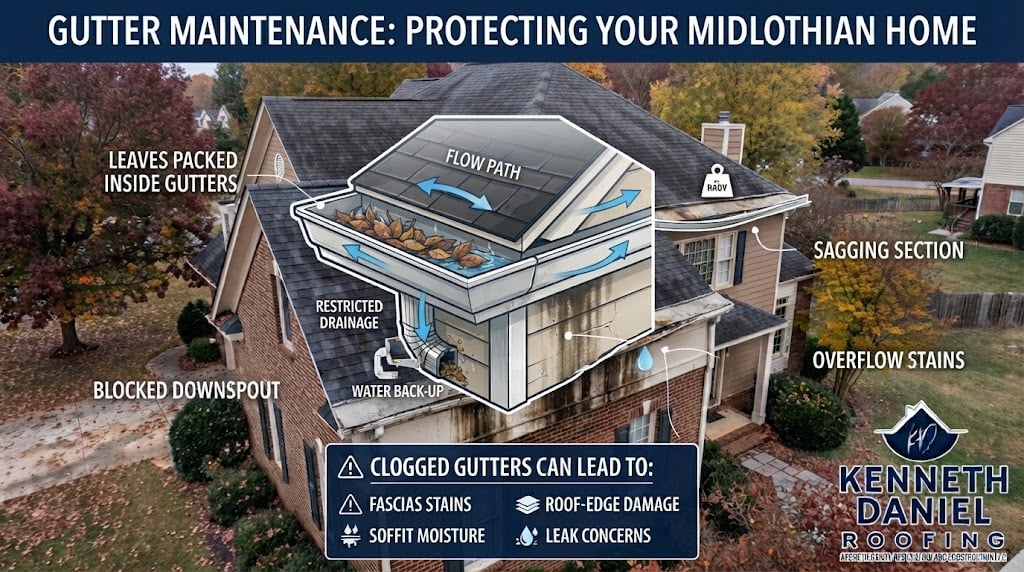
Gutters help move water away from the roof edge, fascia, soffits, siding, and foundation. When leaves fill the gutters, water may not drain the way it should.
Midlothian homeowners should look for:
Leaves packed inside gutters: Water may not move freely.
Blocked downspouts: Water may back up during the next rain.
Sagging gutter sections: Heavy wet debris may pull gutters down.
Overflow stains: Water may have spilled over near the roof edge.
What this may mean: Clogged gutters can contribute to fascia stains, soffit moisture, roof-edge damage, and leak concerns if water cannot drain correctly.
2. Leaves Can Collect in Roof Valleys
Roof valleys carry water from two roof slopes toward the gutters. Because valleys move a lot of water, they need to stay clear. If leaves and debris collect there, water may slow down or sit longer than it should.
Roof valley warning signs include:
Leaves gathered in the valley: Water may not flow freely.
Pine needles packed near shingle edges: Narrow debris can trap moisture.
Dark staining along the valley: Water may be sitting too long.
Leaks after steady rain: A weak valley area may be allowing water in.
What this may mean: Roof valley debris can increase leak risk if water is blocked, slowed, or pushed beneath shingles.
3. Wet Leaves Can Trap Moisture Against Shingles
When leaves sit on the roof after rain, they can hold moisture against the shingle surface. This is more common in shaded areas where the roof does not dry quickly.
Moisture warning signs include:
Damp shaded shingles: Some roof areas may stay wet longer.
Dark stains near leaf buildup: Moisture may be sitting on the surface.
Soft debris near roof edges: Wet leaves may be blocking drainage.
Repeated roof-edge staining: Water may not be moving away correctly.
What this may mean: Wet leaves do not automatically mean roof damage, but trapped moisture can make existing roof weaknesses more noticeable.
4. Leaves Can Hide Shingle Wear and Granule Loss
Leaves and debris can cover early warning signs on the roof. A homeowner may not notice granule loss, lifted shingles, cracked shingles, or small damaged areas if the roof surface is covered.
Hidden roof warning signs include:
Granules mixed with leaves: Shingle wear may be present.
Lifted shingle edges: Wind may have weakened the shingle seal.
Patchy roof color: Some shingles may be aging faster.
Small debris near damaged shingles: Storm or tree debris may be hiding wear.
What this may mean: A roof may look normal from the ground, but leaf buildup can hide early signs of wear that should be checked before winter.
5. Leaves Can Contribute to Roof-Edge Stains
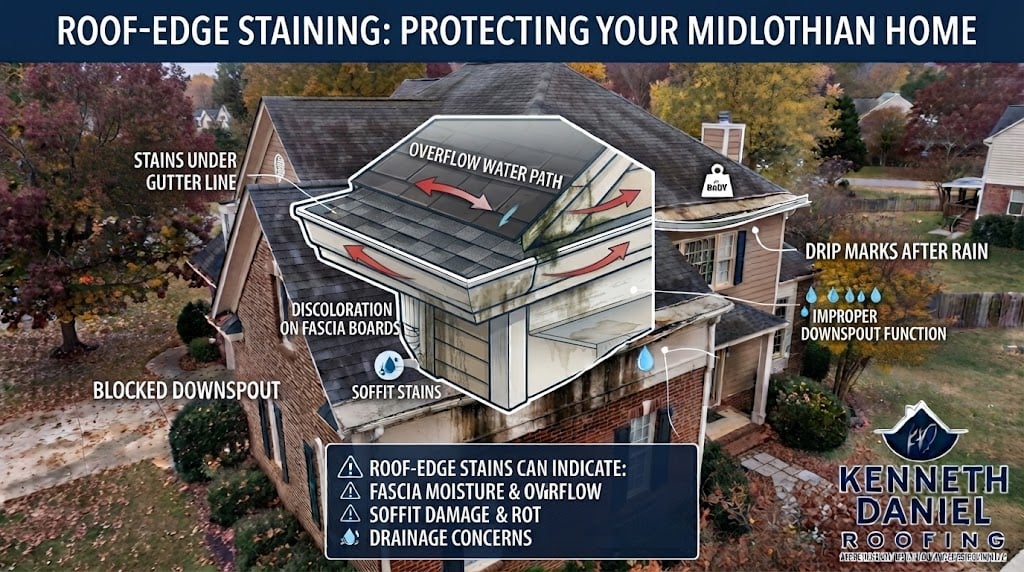
When gutters are clogged, water may overflow near the roof edge. This can leave stains on the fascia, soffits, siding, or nearby exterior surfaces.
Roof-edge warning signs include:
Stains under the gutter line: Water may be spilling over.
Discoloration on fascia boards: Moisture may be affecting wood or trim.
Soffit stains: Water may be reaching underside roof areas.
Drip marks after rain: Water may not be flowing through downspouts.
What this may mean: Roof-edge stains may point to clogged gutters, overflow, fascia moisture, or drainage concerns that should be checked.
6. Leaves Can Make Existing Flashing Issues Worse
Flashing protects roof transitions where the roof meets another surface. These areas include chimneys, walls, dormers, skylights, vents, and roof-to-wall connections. If leaves collect near these areas, moisture may stay close to already vulnerable spots.
Flashing warning signs include:
Loose metal edges: Flashing may not sit tight against the roof.
Cracked sealant: Old sealant may split after heat, storms, and weather changes.
Dark stains near roof transitions: Water may be sitting too long.
Ceiling stains near walls: Water may be entering near a roof transition.
What this may mean: Leaf buildup near flashing can make existing weak areas more likely to show leak symptoms during fall rain.
7. Leaves Can Block Downspouts
Even if the top of the gutter looks partly clear, leaves and pine needles may still block the downspouts. When downspouts are blocked, water may back up into the gutter system during rain.
Downspout warning signs include:
Water spilling over the gutter: The downspout may be blocked.
No water coming out during rain: Flow may be restricted.
Debris near the downspout opening: Leaves may be collecting inside.
Pooling near the foundation: Water may not be moving away properly.
What this may mean: Downspout blockages can cause gutter overflow and increase moisture around roof edges and exterior walls.
8. Leaves Can Contribute to Attic Moisture Concerns
Some roof and gutter issues show up inside the attic before they appear on ceilings. If water is backing up, entering near flashing, or finding a weak roof area, attic moisture may be one of the first warning signs.
Attic warning signs include:
Dark roof decking stains: Moisture may be affecting the underside of the roof.
Damp insulation: Water may be entering or collecting inside the attic.
Musty odors: Moisture may be trapped inside the attic space.
Rust on nail tips: Condensation or attic humidity may be present.
What this may mean: Attic moisture may be connected to roof leaks, gutter overflow, poor ventilation, condensation, HVAC issues, or indoor humidity.
Limitation Note: Attic moisture does not always mean the roof is leaking. A professional inspection can help separate roof issues from ventilation, HVAC, plumbing, and humidity concerns.
9. Leaves Can Make Small Leaks Easier to Notice
Falling leaves may not be the only cause of a leak, but they can help reveal existing roof or gutter problems. When leaves slow drainage or clog gutters, water may find weak areas around shingles, flashing, valleys, pipe boots, or roof edges.
Interior warning signs include:
Ceiling stains after rain: Water may be entering the home.
Peeling paint: Moisture may be affecting interior finishes.
Recurring stains: The original issue may not have been corrected.
Musty smells near upper rooms: Moisture may be present above the ceiling.
What this may mean: A small leak should be checked before repeated fall rain and winter weather make it worse.
10. When to Contact Kenneth Daniel Roofing

You should contact a roofing professional if your Midlothian home has clogged gutters, roof valley debris, roof-edge stains, missing shingles, lifted shingles, loose flashing, attic moisture, ceiling stains, or leaks after rain.
Kenneth Daniel Roofing helps homeowners in Midlothian and nearby Virginia communities with roof inspections, roof repairs, storm damage concerns, roof leak checks, gutter-related roof concerns, attic moisture concerns, and roof replacement planning.
If you are not sure whether falling leaves are creating roof problems at your home, contact Kenneth Daniel Roofing to schedule an inspection and get clear guidance before winter weather continues.
Helpful External Resources
For additional homeowner education, review these trusted third-party resources:
National Weather Service flood safety guidance
Ready.gov severe weather guidance
Energy.gov ventilation guidance
Note: These resources support homeowner education about severe weather, ventilation, roofing, and roof damage, but they cannot diagnose one specific Midlothian roof. A professional inspection can help confirm the condition of your home.
Midlothian and Nearby Virginia Communities
This topic is especially relevant for homeowners in Midlothian, Richmond, Chesterfield, Bon Air, Woodlake, Moseley, Brandermill, Short Pump, Henrico, and nearby Central Virginia communities.
Homes in these areas may deal with mature trees, fall leaves, clogged gutters, roof valley debris, attic moisture, wind-driven rain, roof-edge stains, flashing wear, and aging shingles. These conditions make fall roof maintenance useful before winter weather arrives.
FAQ: Falling Leaves Roof Problems in Midlothian
Get answers about falling leaves, clogged gutters, roof valleys, attic moisture, roof-edge stains, and leak concerns for Midlothian homes.
Can falling leaves cause roof problems?
Yes. Falling leaves can cause roof problems when they clog gutters, block downspouts, collect in roof valleys, trap moisture near shingles, or hide early signs of roof wear.
Why are clogged gutters a roof concern?
Clogged gutters can cause water to overflow or back up near the roof edge. This may contribute to fascia stains, soffit moisture, roof-edge damage, attic moisture, or leaks.
What roof areas collect leaves the most?
Leaves often collect in gutters, roof valleys, downspouts, low-slope roof areas, roof edges, and around chimneys or roof transitions.
How do I know if leaves are causing a roof problem?
Your roof may need attention if you notice clogged gutters, roof valley debris, granules mixed with leaves, roof-edge stains, attic moisture, ceiling stains, or leaks after rain.
When should I call Kenneth Daniel Roofing?
You should contact Kenneth Daniel Roofing if your Midlothian home has recurring leaf buildup, clogged gutters, roof valley debris, roof-edge stains, attic moisture, ceiling stains, or roof leak concerns.
Conclusion
Falling leaves roof problems in Midlothian can happen when leaves collect in gutters, block downspouts, sit in roof valleys, trap moisture, or hide early signs of shingle wear. While leaves are normal in the fall, they should not be ignored when they affect roof drainage.
Not every leaf-covered roof has damage. Some homes may only need gutter cleaning, debris removal, minor repair, flashing review, ventilation review, or continued monitoring. The important step is knowing whether the roof and gutter system are draining correctly before winter weather arrives.
If your Midlothian home has clogged gutters, roof valley debris, roof-edge stains, attic moisture, or leak concerns, contact Kenneth Daniel Roofing to schedule an inspection and get clear guidance.
EXPLORE OUR RECENT ARTICLES


We’re Redefining Roofing. You In?